Saturday, 19 September 2015

The Syrian war's trajectory could radically shift soon

Institute For The Study Of War

Sep. 18, 2015, 8:26 AM 11,070 3

REUTERS/Khalil AshawiResidents carry an injured man at a site damaged by what activists said was a barrel bomb dropped by forces loyal to Syria's president Bashar Al-Assad in Maarat Al-Nouman, south of Idlib June 8, 2015.

The trajectory of the Syrian Civil War may fundamentally shift within the 90 day timeframe. Russia escalated its military assistance on behalf of the Syrian regime in early September 2015, deploying armored vehicles and hundreds of personnel to the Syrian Coast in preparation for the establishment of at least one forward air operations base.

Rebel factions led by Syrian al-Qaeda affiliate Jabhat al- Nusra (JN) continue to pressure the regime’s stronghold along the Alawite Coast following a several-month campaign to expel regime forces from Idlib Province. Turkey and the U.S.-led anti-ISIS coalition intend to establish an “ISIS-free” zone in northern Syria along the Turkish border with the assistance of moderate rebel forces.

ISW

There a number of ways that the actors driving conditions on the ground could respond to these events or generate new conditions. The interplay between these developments and their courses of action could create numerous different outcomes in Syria over the next 12 weeks.

A number of these divergent pathways could generate negative effects that intensify the conflict, spread regional disorder, and threaten U.S. interests in Syria.

It is possible to forecast these trajectories to provide policy-makers and analysts with a key tool to anticipate the actions of adversaries such as ISIS and avert the potential pathways that could be most damaging to the U.S. or its allies. The following forecast applies the traditional techniques of intelligence preparation of the battlefield (IPB) to actors and conditions in Syria.

REUTERS/Bassam KhabiehResidents hug amid rubble of collapsed buildings after what activists said were eight air strikes by forces loyal to Syria's President Bashar al-Assad in Douma Eastern Al-Ghouta, near Damascus March 15, 2015.


IPB is a process of analyzing enemy forces, terrain, weather, and civilian considerations in order to anticipate their effects upon friendly forces and their planned or ongoing operations.

IPB involves analysis of the possible courses of action of the primary actors on the ground, given existing knowledge about their capabilities, tactics, and intent. Courses of action are ranked from most to least likely and evaluated for the dangers that they potentially pose to friendly force operations.APAssad & Putin.

The purpose of this course of action projection is to inform decision-makers with accurate forecasts that adequately account for a range of possibilities as well as the outside risk of most dangerous courses of action. Most dangerous courses of action are designated as such because they are not most likely, but they are nevertheless plausible. Illuminating them allows commanders to mitigate risk while planning in the context of most likely courses of action.

The forecasts presented in this paper are undergirded by several fundamental assumptions.

First, the recent deployment of Russian military forces to Syria will maintain a defensive posture to prevent the collapse of the Syrian regime rather than a direct offensive posture to seize territory from anti-regime actors.

BellingcatRussian military equipment.

Second, the Iranian nuclear accord and its corresponding sanctions relief for the Iranian government will be implemented in full. Third, the U.S. and Turkey will succeed in organizing and launching some form of offensive by rebel forces on the ground in an attempt to implement an “ISIS-free” zone in northern Syria.

Fourth, Turkey will not take hostile action against the Syrian Kurdish YPG due to pressure on both parties by the U.S.

Fifth, neighboring states – particularly Lebanon – will remain relatively stable.

Thomson ReutersA Syrian refugee girl sits on cement blocks amid damage and burnt tents from the fighting between Lebanese army soldiers and Islamist militants in the Sunni Muslim border town of Arsal, in eastern Bekaa Valley

Sixth, the Iraqi Security Forces will continue their current pace and scale of anti-ISIS operations in Iraq with a prioritization of Anbar Province. If one or more of these assumptions prove false over the 90 day timeframe, this forecast will need to be adjusted to account for a significant inflection in the Syrian Civil War.

Based upon the assessed courses of action available to actors on the ground in Syria, ISW anticipates a spectrum of possible developments in the Syrian Civil War over the 90 day timeframe.

These outcomes have been characterized through analysis of the most likely courses of action (MLCOAs) and most dangerous courses of action (MDCOAs) for three primary actors: ISIS, Jabhat al-Nusra, and the Syrian regime with its allies.

Story of how Al-Qaeda members was imprisoned in Iran

1. The report of the release of the leader Sayf al Adl with four other leaders is confirmed and true.

2. The mistake journalists and US intelligence service made was saying his real identit is ex Egyptian colonel Muhammad Ibrahim Makkawi.

3. Many jihadi media outlets made the same mistake, while the truth is Sayf al Adl's personality is different from the ex Egyptian colonel.

4. And some wonder about the story (how Al-Qaeda was imprisoned in Iran) and how Iran managed to capture leaders of Al-Qaeda and why they released them recently.

5. The story of their imprisonment is as follows: After 9/11 US started a war campaign against Afghanistan and focused on the areas Arab Mujahideen(AQ) were located.

6. The campaign was brutal and US used all the weapons they had available from planes and various types of bombs in order to destroy AQ.

7. When US brought in B52 bomberplanes into the war and started throwing various types of bombs which are illegal.

8. After Usama Bin Laden saw this brutal campaign he decided to get the families consisting of women and children of the fighters to secure areas in Waziristan & Balucistan.

9. Usama bin Laden chose Waziristan in Pakistan & Balucistan in Iran because of the Sunni tribes in those areas known for their hospitality.

10. Usama bin Laden was strict on the security of the families and that is why he chose high leaders for this task and he(OBL) prioritized the security of women & children over the fighters.

11. After the families entered Balucistan in Iran and were welcomed by the tribes, US got a tip about high AQ leaders located there (in Iran).

12. US let Iran know about this. Iran started searching through Balucistan and imprisoned many, among them Mujahideen.

13. The brothers in Balucistan decided to move the families from the Balucistan area and into secure places inside big Iranian cities.

14. The free Sunni people in Iran arranged the secure houses inside the Iranian cities for the women & children (of the Arab Mujahideen).

15. The situation got worse and worse in Iran and the remaining Mujahideen & families wanted to move to Kurdistan in Iraq.

16. There was Jihadi groups in Kurdistan, most known Jamaat Ansar al Sunnah, which later changed name to Ansar al Islam.

17. The Mujahideen tried reaching Kurdistan and the majority of them succeded and among them was Abu Musab al Zarqawi, and others were captured.

18. Since the mujahideen & their families were captured by Iran, AQ have been doing all it can to have them released and not have them delivered to US.

19. One of the most important things AQ did was to capture leaders in the Iranian goverment, to swap them for the AQ leaders & families.

20. This is the story of how AQ was imprisoned in Iran.

21. And some have tried to misuse this big trial and fitnah AQ leaders went through in Iran, and portray it like AQ have links with this Rafidi Safawi state Iran.

Arabic version via @BaaSerah https://twitter.com/BaaSerah
Translated by @AbuIzzadeen2 https://twitter.com/AbuIzzadeen2

Al Qaeda in Talks with ISIL to Remerge

Just last week Ayman Al Zawahiri addressed his followers on the anniversary of 9 11 calling them for more lone wolf attacks. “I call on all Muslims who can harm the countries of the crusader coalition not to hesitate. We must now focus on moving the war to the heart of the homes and cities of the crusader West and specifically America”. He might have had Russia in his mind. But even though, we have learned the hard way that fighting the Russians never stops there.

Furthermore, Zawahiri, in the same occasion, hinted at his readiness to reach a kind of reconciliation with ISIL. “I would like to put in the hands of my brothers in Iraq and Syria an invitation for cooperation. I wish however to make it clear upfront that our denial of Al Baghdadi claim to be the Caliph does not mean that we deny his and his brothers’ accomplishments”.

There are three bodies in ISIL which can decide to accept or decline Zawaheri’s, and which can find the proper theological justification of either decision. They are Majlis Al Shura (the leading consultative body), Ahlual Hal wal Aked (Notables in controlled communities and local Emirs and prominent military commanders) and Al Haya’a Al Shara’yah) or the committee that decides either a particular decision is in accordance with Islamic Sharia.

And there are two bodies that can decide to accept or decline a remerge between Al Qaeda and ISIL, Majlis Al Shura and the foreign backers and manipulators of the organization. The heat of the regional confrontation in the Middle East, if not released through diplomatic valves immediately, will melt a good part of the already blurred separation line between ISIL and Al Qaeda.

This will have the most profound impact imaginable on the war fronts in Syria. It equals coloring a huge area on the geographic maps of ISIL areas of control with the black color. It will be reflected momentarily on the positions of many other non-ISIL groups which are currently allied with Jabhat Al Nusra (JAN) on the fighting fields in Syria. And it will turn eastern Syria and western Iraq into a permanent hub of global terrorism.

There are currently some chatters in the Salafi-Jihadi circles that is full of nuanced references to the jurisprudence bases of unifying the ranks of true Muslims to fight the enemies of Islam. Russia’s recent moves into Syria are widely mentioned as an argument to call for the unification of Islamic forces to fight the axis of Putin, Khomeini, Assad and Hezbollah. Some regional hotheads may see an opportunity to traverse the negative impact of 9-11 and reposition Al Qaeda in a more acceptable light as it was during the Afghan war.

We followed what General David Petraeus said in terms of working with Al Qaeda, on tactical bases, to defeat ISIL. As much as we respect the views of the General, we differed with him on this notion, not out of the common and mistaken perception that ISIL is Al Qaeda under a different name, but due to an understanding of the essence of the dispute between the two groups. Furthermore, we saw that legitimizing a cooperation with Al Qaeda in Syria will move the emphasis away from a different valid objective-that is to work harder to optimize certain differences within Al Nusra in order to ease the exist of a considerable faction within its structure and their absorption within other groups which maybe even less fanatic.

We understand that in this particular moment Washington will receive an intensive flood of offers beautifying the offer to work with Nusra. Temptations will take many forms. A commitment from the group to abstain and even take condemn international terrorism, a vow to respect minorities, a declaration of total alliance and many other decorative modifications to the old picture some allies will take upon themselves to provide.

Yet, the problem should not be reduced to short term operational and practical considerations. Any political movement, religious or secular, should be evaluated according to its position on the nation-state question. The collapse of nation-states in this part of the world will lead to the emergence of an alternative ready in the concept of the Caliph. Gaining in the short term will prove historically to be a mistake which may put the two worlds in permanent war under the pretext of ending the Syrian war.

Monday, 7 September 2015

Arab separatists claim attack on #Iran oil facility in IRAN #Ahvaz #الأحواز

BEIRUT – A militant Arab separatist has claimed to have attacked an oil facility in Iran’s southwestern Khuzestan province, while Iranian outlets have stayed silent on the incident.


The Arab Struggle Movement for the Liberation of Ahvaz (ASMLA) published a video Sunday showing a large explosion ripping through the night sky over what the organization claimed to be an oil facility in the town of Behbahan.


The group’s armed wing had issued a statement on September 3 claiming an attack on the petroleum installation, the latest attack by the Arab party since unrest hit the oil-rich region in March.


“The Moheiddine Al Nasser Martyr Brigades carried out a large special operation at dawn on Thursday that targeted the oil installations near the city of Arjan (Behbahan), inflicting heavy material and economic losses on the Persian occupation,” the statement said.


ASMLA added that the operation came “at the moment when some thought the Persian occupation’s state had come out victorious, or at least undefeated, in its struggle with the international community over its nuclear program and the souls of our innocent Arab brothers in Syria, Iraq and Yemen.”


The separatist group on April 1 announced that anti-Tehran Arab groups had “stepped up armed operations targeting the Iranian Revolutionary [Guards]” in the southwestern region of Iran.


ASMLA claimed in the early spring that the “Ahvazi national resistance” has conducted seven attacks against Iranian security forces since March 19, leaving a number of security officers dead.


Iranian press outlets confirmed one of the attacks, but did not report that it was conducted by Arab separatists, saying instead than an investigation has been launched to identify and arrest the perpetrators.


On May 17, the group’s military wing attacked a governorate administrative office in Susangerd in an operation acknowledged by Rahyab News, which reported that “unidentified people” had set the building alight before opening fire on it after which they fled the scene.


Khuzestan unrest


In mid-March, ASMLA’s leader threatened that his group’s armed wing, the Moheiddin Al Nasser Martyr Brigades, was prepared to deal “painful blows” to security forces if they continued to suppress demonstrations in the region.


“Over the coming days Ahvaz will see violent events between the occupier and the Ahvazi [Arabs],” Habib Jaber al-Ahvazi vowed amid mounting protests in the region.


Unrest has been boiling over in Khuzestan after Younes Asakereh, a street vendor in Khoramshahr, immolated himself on March 13 to protest the confiscation of his sales stand.


Days afterward, Iranian authorities arrested local residents supporting a visiting Saudi football club playing against the local football club in the provincial capital Ahvaz.


The arrests sparked a melee as a number of the local fans, who had reportedly burned posters of former Supreme Leader Ayatollah Ruhollah Khomenei, clashed with security forces and set alight one of their vehicles.


Further protests ensued on March 24 when demonstrators held a funeral procession for Asakereh in Ahvaz and chanted against the regime, while two other demonstrations erupted in the towns of Shush and Khafajiyya the following week.


Al-Arabiya on March 31 cited human rights groups active in the southwestern Iranian province as saying that authorities fear the protests might spread across the region, which hosts a substantial population of ethnic Arabs.


Khuzestan has long been the scene of unrest against the ruling authorities, including the Pahlavi royal dynasty, which put down a revolt in the region in 1924. In the ensuing decades violence sporadically broke out in the Arab-populated regions of the province, most notably in 1979 when more than 100 residents died in an uprising following the Iranian revolution.


In mid-April 2005, Ahvaz was hit by four days of protests that opposition activists said left at least 50 dead. Six years later, protests held on the anniversary of the 2005 events turned deadly as well, with over a dozen people dying.


ASMLA, which was founded in 1999, has conducted a number of attacks in Khuzestan, including two bombing in Ahvaz in 2006.


posted from Bloggeroid

Sunday, 6 September 2015

تو پھر سنہ 65 میں ہارا کون؟

وسعت اللہ خان بی بی سی اردو

پاکستان کہتا ہے سنہ 1965 کی جنگ وہ جیتا۔ بھارت کہتا ہے وہ جیتا۔ تو پھر ہارا کون ؟ اگر دونوں طرف کے سرکاری مورخوں کو زیادہ تنگ کیا جائے تو وہ کہتے ہیں کہ ہماری جیت یہ ہے کہ ہم نے دوسرے کو نہیں جیتنے دیا۔

بھارت کہتا ہے کہ سنہ 65 کی جنگ دراصل پانچ اگست کو شروع ہوئی جب پاکستان کی طرف سے آٹھ سے 10 ہزار کشمیری سویلین رضاکاروں اور سادہ لباس فوجیوں پر مشتمل جبرالٹر فورس بھارت کے زیرِ انتظام کشمیر میں بغاوت ابھارنے کے لیے بھیجی گئی اور جب آپریشن جبرالٹر ناکام ہوگیا تو بھارت نے آگے بڑھ کر حاجی پیر ، کارگل اور ٹیٹوال کے دروں پر قبضہ کرلیا۔

اس جوابی کارروائی کا زور توڑنے کے لیے پاکستان نے یکم ستمبر کو اکھنور اور جموں پر قبضے کے لیے آپریشن گرینڈ سلام شروع کیا اورگرینڈ سلام کا دباؤ توڑنے کے لیے بھارت نے چھ ستمبر کو لاہور سیالکوٹ سیکٹر میں بین الاقوامی سرحد پار کر لی۔

مگر پاکستان کی سرکاری تاریخ پڑھی جائے تو لگتا ہے جنگ چھ ستمبر کو شروع ہوئی۔

آپریشن جبرالٹر اور گرینڈ سلام کا کوئی ذکر ہی نہیں اور نہ آج تک اس راز سے پردہ اٹھا کہ جب کشمیر کو بھارت سے کاٹنے کے لیے اکھنور کی جانب پیش قدمی تیزی سے جاری تھی تو اسے اچانک کیوں روک کر آپریشن گرینڈ سلام کے خالق اختر حسین ملک کی جگہ میجر جنرل یحییٰ خان کو کمان دے دی گئی اور پھر نئے کمانڈر نے کیا تیر چلا لیا۔

بقول جنرل گوربخش سنگھ، اکھنور کی جانب پاکستانی پیش قدمی کا 36 گھنٹے تک خود بخود رک جانا ہمارے لیے آسمانی مدد کے برابر تھی۔

کچھ اور سوالات بھی 50 برس بعد جواب طلب ہیں۔

مثلاً سنہ 1965 کی جنگ کا مقصد اگر کشمیر کی آزادی تھا تو کیا آپریشن جبرالٹر سے پہلے بھارت کے زیرِ انتظام کشمیر میں آزادی پسند قیادت کو پیشگی اعتماد میں لیا گیا؟

یا پھر فرض کرلیا گیا کہ عام کشمیری اپنے نجات دھندوں کو دیکھتے ہی بھارت کے خلاف اٹھ کھڑے ہوں گے۔ یہی تجربہ کیا اکتوبر سنہ 1947 میں ناکام نہیں ہوا تھا؟

بھٹو ، عزیز احمد ، میجر جنرل اختر حسین ملک ، ایوب خان اور جنرل موسی آخر کس مفروضے پر یہ جنگی پلان بنا رہے تھے کہ لڑائی کشمیر تک ہی محدود رہے گی اور بھارت بین الاقوامی سرحد عبور کرنے کی حماقت نہیں کرے گا۔

لہذا نہ ائیر فورس اور بحریہ کو اس پلان میں شریک کرنے کی ضرورت ہے اور نہ ہی لاہور اور سیالکوٹ کی ڈویثرنل کمان کو فارورڈ پوزیشنز پر بھیجنے کے احکامات کی ضرورت، اور نہ ہی چھٹی پرگئے 25 فی صد جوانوں اور افسروں کو طلب کرنے کی ضرورت، اور نہ ہی گورنر مغربی پاکستان امیر محمد خان کو کچھ بتانے کی ضرورت، اور نہ ہی اس فکر کی ضرورت کہ بھارت نے اگر دوسرا محاذ مشرقی پاکستان کی طرف سے کھول دیا تو کیا ہوگا؟ ( یہ وہ سوال تھا جس نے بنگالیوں کا دل اور چھید دیا)۔

کیا جنگ سے پہلے ہائی کمان نے سوچا کہ پاکستان کے پاس کتنے دن کا اسلحہ اور گولہ بارود ہے اور جنگ طول پکڑتی ہے تو کیا ہوگا؟

جنگ ہمیشہ خاص قومی اہداف حاصل کرنے کے لیے لڑی جاتی ہے۔ اگر پاکستان کا ہدف کشمیر تھا تو ہدف حاصل کیے بغیر کامیابی کس بات کی؟

معاہدہ تاشقند کے تحت بھارت نے 710 مربع میل علاقہ پاکستان کو اور پاکستان نے210 مربع میل علاقہ بھارت کو واپس کیا اور دونوں ممالک کی فوجیں پانچ اگست سے پہلے کی پوزیشن پر واپس چلی گئیں۔

پاکستان معاہدہِ تاشقند میں اقوامِ متحدہ کے تحت کشمیر میں رائے شماری کا وعدہ تک شامل نہ کروا پایا۔ یوں یہ مسئلہ مزید ناقابلِ حل ہوتا چلا گیا۔

آپریشن جبرالٹر کے دوران کتنے پاکستانی جان سے گئے؟ ان کی قربانیوں کے بارے میں عسکری تاریخ خاموش ہے۔ بس یہ بتایا جاتا ہے کہ چھ سے 22 ستمبر تک3800 پاکستانی فوجیوں اور 5500 کے لگ بھگ ہندوستانی فوجیوں کی جان گئی اور اتنے طیارے اور اتنے ٹینک تباہ ہوئے۔

بظاہر نہ پاکستان کے پاس کوئی حقیقی جنگی پلان تھا نہ بھارت کے پاس۔ شاید اسی لیے دونوں ممالک نے 17 دن بعد ہی اقوامِ متحدہ کی جنگ بندی قرارداد فوراً مان لی ۔

لیکن انفرادی سطح پر جرات و بہادری کی داستانیں بہرحال رقم ہوئیں۔ ایک جانب اگر پاکستان کی ناقص جنگی پلاننگ نے بھارت کو سنبھالا دیا تو دوسری جانب پاکستانی فضائیہ اور آرمڈ دستوں نے بھارت کو روکنے میں بنیادی اور کلیدی کردار ادا کیا۔

یہ جنگ ریڈیو پاکستان اور آکاش وانی پر بھی خوب لڑی گئی۔ اس جنگ کے طفیل بھارت میں ہندی میں اور پاکستان میں اردو اور پنجابی میں لہو گرما دینے والے جنگی ترانے تخلیق ہوئے۔ ہو سکتا ہے سندھی ، پشتو ، بلوچی اور بنگالی میں بھی ترانے گائے گئے ہوں مگر یہ فقیر لاعلم ہے۔

بھارت نے اپنی جنگی ناکامیوں کے بعد خاموشی سے حکمتِ عملی تبدیل کی جس کا نتیجہ سنہ 1971 کی جنگ میں نکلا۔ جبکہ پاکستانی قیادت نے سنہ 65 کی جنگ میں بیرونی تو کیا ان ہاؤس تحقیقات کی زحمت بھی نہیں کی۔

کئی برس بعد لیفٹننٹ جنرل ( ریٹائرڈ ) محمود احمد نے ساڑھے چھ سو صفحات پر مشتمل تحقیقی مسودہ لکھا مگر وہ بھی کتابی شکل میں ڈھلنے کی اجازت نہ پا سکا۔ شاندار فتح کے نصابی و سرکاری پروپیگنڈے تلے سب دب دبا گیا۔

چنانچہ سنہ 1971 کی جنگ بھی ویسی ہی ناقص منصوبہ بندی کے تحت لڑی گئی اور پھر کارگل کی لڑائی بھی سنہ 1948 اور 1965 کی فوجی حکمتِ عملی کی فوٹو کاپی سامنے رکھ کے لڑی گئی۔ نتائج آپ کے سامنے ہیں۔

بھارت میں اگر مودی سرکار عوام کے سامنے خود کو سمراٹ اور دبنگ دکھانے کے لیے اچانک سے سنہ 1965 کی ’شاندار فتح‘ کی گولڈن جوبلی ایجاد نہ کرتی تو پچاس برس سے کم عمر بیشتر بھارتیوں کو شاید یہی معلوم نہ ہوتا کہ ایسی کوئی جنگ ہوئی بھی تھی۔ کیونکہ پاکستان کے برعکس بھارت میں کبھی بھی 1965 کی جنگ کی قومی سطح پر سالگرہ منانے کا رواج نہیں رہا۔

اگر نصف صدی بعد بھی بھارت اور پاکستان سرکاری سطح پر جنگی سچ کا سامنا کرنے کو تیار نہیں تو اس سے بڑی شکست اور کیا ہو گی؟

Friday, 4 September 2015

Rise of ISIS from AQI and how AQ will eventually benefit from the rise of ISIS Group

Since the Islamic State made its dramatic military advance from Syria into Iraq more than a year ago — capturing Mosul and other key cities, and declaring the caliphate’s re-establishment — analysts have reached a near-consensus that the group’s emergence has devastated its parent organization, al-Qaeda. Indeed, the Islamic State has undermined al-Qaeda’s once unrivaled position as the standard-bearer of the jihadist movement, outstripping al-Qaeda’s public messaging with its robust propaganda apparatus. The Islamic State has persuaded several groups that were previously in al-Qaeda’s orbit — including Ansar Bayt al-Maqdis and Boko Haram — to break away and re-style themselves as provinces of the caliphate. Many analysts believe the Islamic State has become the preeminent global jihadist organization.

While the Islamic State’s emergence has harmed al-Qaeda in myriad ways, it has also presented al-Qaeda a long-awaited opportunity. For years, al-Qaeda sought to remake its image, hoping to rid itself of the reputation for brutality that it earned in large part through the excesses of al-Qaeda in Iraq (AQI) — the group that would later rechristen itself the Islamic State. Thanks to two parallel developments — the Islamic State’s emergence and rising Sunni–Shia sectarian tensions in the Middle East — al-Qaeda’s rebranding campaign has been invigorated. Al-Qaeda has taken on the image of a more reasonable — and perhaps controllable — alternative to the Islamic State. And as the rivalry between Iran and Sunni states rages, including proxy wars in Syria and Yemen, al-Qaeda can present itself as a bulwark against Iranian expansion.

Only within both this current context and that of the past decade can al-Qaeda’s rebranding campaign be understood, and its chances for success assessed.

Al-Qaeda’s Failed Iraq Campaign

Al-Qaeda’s belief that it needed to remake its image dates back to the group’s campaign in Iraq in the mid-2000s. AQI ascended rapidly to the fore of the global jihadist movement and then burnt out just as quickly, scorching al-Qaeda’s image as well. AQI’s early success during the U.S. occupation derived in part from its ability to spark sectarian strife through waves of attacks into Shia areas; AQI correctly believed that it could interject itself into a sectarian civil war by presenting itself as the Sunnis’ protector. Yet even while it offered protection from the Shia reprisals that it had provoked, the group oppressed those same Sunnis by imposing an alien form of religious law through its reign of terror in Anbar province. An intelligence assessment written in August 2006 described AQI as the “dominant organization of influence” in Anbar.

AQI’s proclivity for brutality and indiscriminate violence raised concerns within al-Qaeda’s senior leadership (AQSL), which feared that AQI would alienate Iraqis. Members of AQSL sent at least two letters — from then-deputy emir Ayman al-Zawahiri and masul aqalim (head of regions) Atiyah Abd al-Rahman — to AQI’s emir Abu Musab al-Zarqawi exhorting the hotheaded Jordanian to moderate his approach. Zawahiri reprimanded Zarqawi for his videotaped beheadings of victims, warning the former street thug not to “be deceived by the praise of some of the zealous young men and their description of you as the shaykh of the slaughterers.” Both Zawahiri and Abd al-Rahman emphasized the need to win over the population, with Abd al-Rahman instructing him to gain Iraqis’ support in a gradualist manner by “lauding them for the good they do, and being quiet about their shortcomings.”

The objections offered by Zawahiri and Abd al-Rahman were strategic rather than moral. Indeed, Zawahiri noted that rather than beheading AQI’s prisoners, “we can kill the captives by bullet.” The preeminence of strategic over moral concerns can be discerned also in al-Qaeda’s current rebranding efforts, where rather than avoiding atrocities, al-Qaeda appears more concerned with keeping them off-camera and minimizing the negative attention that often accompanies this brutality.

Zarqawi disregarded AQSL’s instructions, and after a period of repression, the Sunni population in Anbar rebelled in a tribal uprising known as the Sahwa (Awakening) movement. The Sahwa soon spread to other provinces and, along with the “surge” in U.S. troops and American shift to population-centric counterinsurgency, contributed to AQI’s downfall. It amounted to a repudiation of AQI — and by extension, of al-Qaeda itself.

The damage done by AQI and its successor organizations was so severe that in January 2011 Adam Gadahn, an American-born al-Qaeda media strategist, wrote a letter to Osama bin Laden arguing that al-Qaeda should cut ties with its Iraqi branch. Gadahn contended that if al-Qaeda did not expel AQI, al-Qaeda’s “reputation will be damaged more and more as a result of the acts and statements of” that group, “which is labeled under our organization.” There is no indication that Gadahn’s suggestion was seriously entertained at the time.

Early Rebranding Efforts

After AQI’s failed experiment, top al-Qaeda commanders began exploring how to repair the group’s reputation, as revealed by documents recovered from bin Laden’s Abbottabad compound. In a letter from an unknown AQSL official to al-Qaeda in the Arabian Peninsula (AQAP), the official criticized AQI for killing tribesmen and inciting a rebellion, and stressed the importance of gaining public support, noting that “people’s support to the mujahedin is as important as the water for fish.” The statement’s similarity to Mao’s well-known adage that “the guerrilla must move amongst the people as a fish swims in the sea” is not coincidental.

Perhaps the clearest evidence of al-Qaeda’s rebranding efforts can be found in a letter that bin Laden wrote to Atiyah Abd al-Rahman in May 2010. Bin Laden lamented the damage that affiliates had done to al-Qaeda’s image, noting that indiscriminate violence had “led to the loss of the Muslims’ sympathetic approach towards the mujahedin.” Bin Laden proposed commencing a “new phase” in al-Qaeda’s operations that would “regain the trust of a large portion of those who had lost their trust in the mujahedin.” Bin Laden emphasized minimizing Muslim casualties and directing affiliates to exert caution when civilians could be harmed. He urged a new media strategy, ordering media operatives to avoid “everything that would have a negative impact on the perception of the nation towards the mujahedin.”

AQSL even considered changing the organization’s name. In a letter found in Abbottabad, an unidentified official remarked that the group’s name had become disassociated from Islam, allowing Western states to claim that their war was with al-Qaeda and not the broader Muslim community. The official asserted that al-Qaeda (the base in Arabic) had become associated solely with a “military base,” without any “reference to our broader mission to unify the nation.” The official proposed several alternative names.

Officials continued to try to put the rebranding plan into action following bin Laden’s death. In September 2013, Zawahiri released a document entitled “General Guidelines for Jihad” that made public al-Qaeda’s new, population-centric approach. Zawahiri instructed affiliates to avoid conflict with Middle Eastern governments when possible, asserting that conflict with local regimes would distract from efforts to build bases of support. Zawahiri also instructed affiliates to minimize violent conflict with Shias and non-Muslims in order to prevent local uprisings, and to abstain from attacks that could result in Muslim civilian casualties. A purportedly leaked letter that Zawahiri wrote to the Islamic State’s caliph Abu Bakr al-Baghdadi in September 2013 notes that the General Guidelines were distributed to all of al-Qaeda’s affiliates for review prior to their publication to allow for comments and objections, thus suggesting the document represents the unified policies of al-Qaeda as a whole.

Teaching an Old Dog New Tricks

Early efforts to change al-Qaeda’s image yielded mixed results. Some affiliates executed the rebranding strategy poorly or inconsistently, while others disregarded this more constrained approach entirely.

The jihadist experience in northern Mali in the spring of 2012 illustrates how aggressive local commanders could undermine al-Qaeda’s rebranding efforts. When jihadist groups under the command of al-Qaeda in the Islamic Maghreb (AQIM) took control of northern Mali, they implemented a harsh form of sharia (Islamic law). The jihadists’ strict governance was at odds with Malians’ more moderate religious practice, and the jihadists’ heavy-handed approach — militants frequently beat, whipped, and stoned locals — sparked a mass exodus of civilians to neighboring Mauritania.

This approach earned a rebuke from AQIM’s emir Abdelmalek Droukdel, thus illustrating the cohesion between AQIM’s leadership and its counterparts in Afghanistan-Pakistan. In a letter to the Mali-based jihadists, Droukdel criticized the “extreme speed with which” they imposed sharia, castigating them for destroying Sufi shrines and for relying excessively on corporal punishments. Droukdel instructed the Malian jihadists to ally with other militant groups, including Tuareg rebels and other non-salafists, and to focus on amassing public support. These directives closely mirrored the guidelines for jihad that Zawahiri would release publicly a year later.

This uneven implementation was true also of AQAP, al-Qaeda’s Yemen-based affiliate. In December 2013, AQAP militants attacked the defense ministry compound in the capital of Sana’a. A hospital was targeted, and several unarmed medics and civilians were killed. While AQAP immediately claimed credit, the group backpedaled after a video aired on state television showing an AQAP fighter gunning down doctors and other civilians in the hospital. Qassem al-Rimi, AQAP’s then-military chief, was forced to issue a rare apology, claiming the hospital attack had been the work of a rogue militant who defied commanders’ orders. He promised that AQAP would pay blood money.

The Mali case suggests a disconnect between top-level leaders and local commanders, while Yemen is more likely an instance of al-Qaeda trying to show moderation only after having its atrocities broadcast. At any rate, uneven implementation often undercut al-Qaeda’s early rebranding efforts.

The Islamic State’s Rise and al-Qaeda’s Opportunity

Though the Islamic State’s rise has been a disaster for al-Qaeda in many respects, al-Qaeda’s rebranding campaign has benefitted from the Islamic State’s emergence. While al-Qaeda’s missteps prior to the Islamic State’s rise as a competitor received considerable media scrutiny, the group’s use of violence has been eclipsed by the Islamic State’s unchecked atrocities. The Islamic State’s beheadings, immolations, and mass executions have allowed al-Qaeda to change its image in a way that would have been unthinkable when the “Arab Spring” revolutions first gripped the region in 2011. Al-Qaeda is in the process of recasting itself to two audiences: presenting itself as a more palatable alternative to the Islamic State to locals, while portraying itself as a potential partner to regional governments against the Islamic State. In al-Qaeda’s rebranding efforts, the Islamic State has become a convenient foil.

Sunni–Shia geopolitical tensions have also been a boon to al-Qaeda’s rebranding strategy. The intensifying rivalry between the Sunni Gulf states and Iran has provided al-Qaeda an opportunity to present itself as a bulwark against Iranian influence in places like Syria and Yemen.

As part of its rebranding initiative, al-Qaeda has launched a full-blown media campaign in recent months, deploying top officials to give interviews with mainstream media outlets. These officials downplay the threat the group poses to the West, and sometimes even encourage the perception of al-Qaeda’s weakness.

One of the first concrete signs of this media offensive came in early 2015, when Zawahiri issued a directive to Abu Muhammad al-Julani, the emir of al-Qaeda’s Syrian affiliate Jabhat al-Nusra, ordering Julani to improve Nusra’s ties with the Syrian population and other rebel groups. Zawahiri’s decree codified, to some extent, Nusra’s existing strategy. Since 2012, Nusra had collaborated with other Syrian rebel groups, and had amassed considerable public support. However, in the latter half of 2014, Nusra was involved in infighting with other rebel groups, and Zawahiri’s edict was intended to clarify Nusra’s position.

Since then, Syria has become a primary testing ground for al-Qaeda’s rebranding strategy. In March 2015, Al Jazeera aired an interview with Abu Sulayman al-Muhajir, an Australian cleric who became one of Nusra’s top religious officials. Muhajir contrasted Nusra with the Islamic State, stating that Nusra’s primary goal was to topple Assad and “restore the right of the Muslim people to choose their leaders independently.” His emphasis on popular representation and claim that Nusra focused on national objectives would become hallmarks of Nusra’s media campaign.

After Muhajir’s interview, Nusra granted Al Jazeera a conversation with Julani. In May 2015, Nusra’s emir sat for a 47-minute interview in which he too contrasted Nusra’s approach with the Islamic State’s extremism. Julani asserted that Nusra’s sole goal was to topple the Assad regime. He hedged on the question of whether Nusra would establish an Islamic state once Assad was removed, claiming all rebel groups would be consulted before a state was established. Julani adopted a comparatively tolerant stance toward religious minorities, promising that Nusra would neither target Druze nor Alawites. (Julani did say that Alawites would have to renounce elements of their faith that contradicted Islam, and Al Jazeera’s English-language reporting on the interview omitted these ominous statements.)

Al-Qaeda ideologues have also been involved in rebranding efforts. Abu Muhammad al-Maqdisi and Abu Qatada, two of al-Qaeda’s most prominent religious figures, gave an in-depth interview to the U.K.’s Guardian for an article published in June 2015. Both Abu Qatada and Maqdisi slammed the Islamic State, while claiming the Islamic State’s emergence had caused al-Qaeda’s organization to “collapse.” The two clerics’ statements look different when examined in the context of al-Qaeda’s rebranding campaign; their portrayal of al-Qaeda as a dying organization fits the group’s strategy of understating its strength in order to avoid drawing the attention of Western militaries and alleviating Gulf states’ fears.

Nusra has buttressed this media offensive by adopting a more collaborative approach toward other Syrian rebel factions. In March 2015, Nusra and several other prominent rebel groups, including the hardline salafi group Ahrar al-Sham, announced the establishment of a new coalition, Jaysh al-Fatah (Army of Conquest). Since then, Nusra and its allies have made considerable gains in Idlib province. Nusra has exported this collaborative model to other provinces, and Nusra has signaled that it is open to sharing power with other organizations: After Jaysh al-Fatah captured Idlib city, Julani stated that Nusra would not “strive to rule the city or to monopolize it without others.”

Consistent with the uneven implementation of al-Qaeda’s rebranding campaign, some of Nusra’s actions have departed from its goal of displaying a moderate face. In June 2015, Nusra fighters killed at least twenty Druze in a town in Idlib province, but Nusra’s leadership was quick to conduct damage control. Three days after the massacre, Nusra issued a communiqué apologizing for the attack and explaining that those involved had not secured the approval of their commanders. Nusra asserted that it would try the perpetrators in a sharia court.

Al-Qaeda is also implementing its rebranding strategy in Yemen, where the conflict between Iranian-backed Houthis and a Saudi-led military coalition, as well as the Islamic State’s emergence, have enabled AQAP to recast itself as a force that can counter both the Houthis and the Islamic State. AQAP sometimes fights the Houthis alongside the Saudi-led coalition and has engaged in a careful balancing act where it carries out attacks against Houthi militants while distancing itself from the Islamic State’s terrorist operations against Houthi civilians.

AQAP has also capitalized on the anarchic conditions in Yemen to carve out territory for itself and has exhibited its new gradualist approach to governance. In April, AQAP seized the city of Mukalla, the capital of Hadramawt province. The group refrained from hoisting jihadist banners, and even issued a statement refuting rumors that it would ban music and shorts for men. AQAP established an umbrella group to rule Mukalla known as the Sons of Hadramawt, a name intended to emphasize local roots, and has generally avoided measures that could alienate the local population. AQAP will likely export this model of governance to other provinces as it continues to exploit Yemen’s chaotic situation.

Reaping the Benefits

Al-Qaeda’s rebranding efforts have already found some traction with local populations and Sunni states, and even some Western analysts. In both Syria and Yemen, al-Qaeda affiliates have received support from, or fought alongside, Sunni states. The Jaysh al-Fatah coalition in Syria has become a favorite aid recipient for Turkey, Qatar, and Saudi Arabia. Meanwhile, AQAP has benefitted from the Saudi-led coalition’s preoccupation with the Houthi and Iranian threats. Mukalla residents say the tribes that run the city receive Saudi aid, some of which almost certainly reaches AQAP. Saudi Arabia has refrained from carrying out air strikes against AQAP strongholds and has turned a blind eye to AQAP developing a foothold in other parts of southern Yemen. Prince Faisal bin Saud bin Abdulmohsen, a scholar at the King Faisal Center for Research and Islamic Studies, explained the Saudis’ divergent approach toward al-Qaeda and the Islamic State: “At this point we must really differentiate between fanaticism and outright monstrosity.”

The Islamic State threat has also raised al-Qaeda’s stock in Jordan. When the Islamic State captured a Jordanian air force pilot in December 2014, Jordan tasked Abu Muhammad al-Maqdisi with negotiating with the Islamic State. Later, Jordan released Maqdisi from prison and allowed him to appear on Jordanian television. While Jordan isn’t naïve about Maqdisi or al-Qaeda, the Hashemite Kingdom appears to be tolerating Maqdisi and other al-Qaeda supporters in the hope that they can curb the Islamic State’s growth.

In recent months, two respected scholars have written prominent articles arguing for a different approach to al-Qaeda. In March 2015, Haverford College’s Barak Mendelsohn authored an article in Foreign Affairs entitled “Accepting al-Qaeda,” which argued that the United States should “rethink its policy toward al-Qaeda, particularly its targeting of Zawahiri,” which could play into the Islamic State’s hands. In June 2015, Ahmed Rashid, the author of several bestselling books, wrote a New York Review of Books article titled “Why We Need al-Qaeda.” Rashid cited several key elements of al-Qaeda’s rebranding campaign, including AQAP’s governance of Mukalla and Julani’s interview with Al Jazeera, as evidence that al-Qaeda could be a partner against the Islamic State.

As the Islamic State dominates headlines and talk shows, analysts seem to be underestimating al-Qaeda’s strategic capacity to adapt and thrive. Al-Qaeda’s rebranding campaign leaves it well positioned to exploit political conditions in the Middle East for years to come. Al-Qaeda’s affiliates have worked to restore the group’s image, garnered public support in countries like Syria and Yemen, and even won the support of some Sunni states. But beneath the smoke and mirrors of al-Qaeda’s rebranding campaign lies a more disconcerting reality: Al-Qaeda remains a dangerous group with expansionist aims that is committed to striking the West and overthrowing Middle Eastern regimes. Unless analysts take a closer look at al-Qaeda’s ongoing rebranding efforts, we run the risk of being conned by the group’s image makeover.

Monday, 31 August 2015

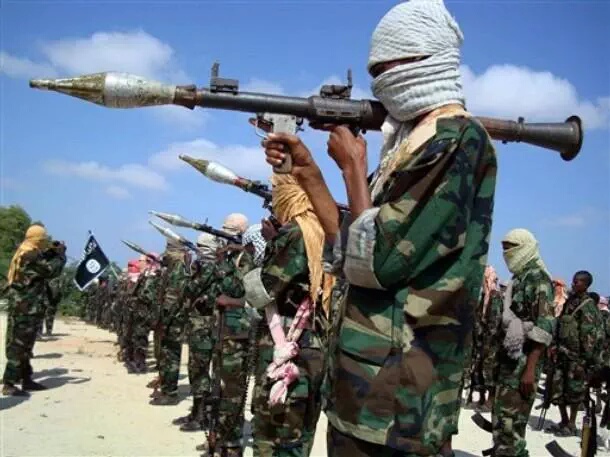
صومالی القاعدہ کے مجاھدین نے بڑا حملہ کر کے افریقی اتحاد کی افواج کے بڑے فوجی اڈے پہ قبضہ کر لیا-

صومالی القاعدہ (الشباب) کے مجاھدین نے یوگنڈہ میں جنالی کے علاقے میں ایک بڑے فوجی بیس پہ حملہ کر کے قبضہ کر لیا اور بیس پہ اپنے جھنڈے لہرا دئیے-
حملے کا آغاز ایک فدائی حملے سے کیا گیا جس سے تقریباً 60 یوگنڈہ کے فوجی ہلاک ہو گئے اور کے بعد الشباب کے مجاھدین نے بیس پہ حملہ کر دیا اور شدید فائرنگ شروع ہو گئی- بچ جانے والے یوگنڈہ کے فوجیوں نے قریبی دریا شبیلے میں کود کر جانیں بچائی- ابھی فوجیوں کی اموات کے کل شمار کا صحیح اندازہ نہیں لگایا جا سکا-
اس فوجی بیس پہ اسلحے کے بڑے ذخائر ہیں جن پہ اب مجاھدین کا قبضہ ہو گیا ہے- مجاھدین نے کاروائی سے پہلے فوجی اڈے کو جانے والا پل بھی دھماکے سے اڑا دیا تھا تا کہ مذید کمک نہ پہنچ سکے اور نہ ہی فوجی وہاں سے بھاگ سکیں-
واضح رھے کہ یوگنڈہ کی فوج افریقی یونین کے فوجی اتحاد AMISOM کا حصہ ہیں جن کو اقوام متحدہ نے الشباب مجاھدین کے خلاف لڑنے کے لئے تشکیل دیا ہے لیکن یہ اتحاد الشباب کو ختم کرنے میں بری طرح ناکام ہو گیا ہے-


posted from Bloggeroid