Showing posts with label Jihad. Show all posts

Wednesday, 17 February 2016

Saudi Arabia's Two-War Doctrine is Becoming a Reality

For decades after the end of the Second World War, the United States maintained a “two-war” defence doctrine. The military organised its capabilities around the idea that it should be able to fight two conventional wars, in two separate theatres, at the same time.

That, after all, had been the reality in the Second World War, when the US had to fight in Europe and the Pacific simultaneously.

The doctrine came to an end in 2010, and in the 60 years that it was active, it was never enacted. The nearest the US came in recent history were the two wars in Iraq and Afghanistan, neither of which were conventional wars for long. Indeed, it was the inability to win those wars that finally pushed the US to change its policy.

A similar doctrine appears to be taking shape in Saudi Arabia, but the other way around. The kingdom is having to ramp up its military presence in response to multiple threats, not to meet some future perceived threat.

Saudi Arabia doesn't have the advantages that the US has long enjoyed, hidden away behind two oceans. In fact, Saudi Arabia faces serious challenges on at least three of its borders.

There is the long, porous border to the south with Yemen, currently the focus of its most serious military effort. There is the eastern flank, facing regional rival Iran. And there is its long northern border, the majority of which has Iraq on the other side. Only to the west, across the Red Sea, are there clear allies in Egypt and Sudan.

Saudi Arabia has not yet articulated its defence posture. But it does look as if it has taken the two-war doctrine as a starting point.

The Northern Thunder joint military exercises it is conducting with 20 other countries, touted as the largest joint military exercises ever conducted in the region, are a pointed message to its adversaries, whether states (Iran), regimes (Syria) or groups (ISIL).

That it is taking place in Saudi Arabia’s north is no coincidence. With a serious war underway to the south, the kingdom is seeking to show that it can, despite suggestions, fight on two separate fronts.

After all, if the country can project power with Northern Thunder, what is to stop it using that power farther north?

The obvious place for that power projection is Syria. Earlier this month, a Saudi official, Brigadier General Ahmed Al Asiri, suggested the kingdom could send ground troops to Syria to fight ISIL – although it is likely to seek support from its allies as well, some of whom are involved in Northern Thunder.

Taken together with other elements – Saudi fighter jets are now stationed at Turkey's Incirlik base, close to the Syrian border – it is hard to avoid the message that Saudi Arabia and its allies are prepared to involve themselves in the Syrian civil war, if need be.

But there’s a second part to any new defence doctrine, and that is the political aspect. Saudi Arabia’s new muscular military posture requires close cooperation between allies.

Northern Thunder, after all, is a follow-up to Abdullah Sword, Saudi Arabia’s 2014 military exercise that was, at the time, the largest it had ever conducted.

Abdullah Sword involved all the GCC countries except Qatar. Northern Thunder builds on it, expanding Saudi’s list of allies further.

The message is unmistakable. The Saudi-led coalition is expanding, not diminishing.

And it is in that that we can discern the real intention behind Northern Thunder. The Saudis are seeking to use the military exercises as a way to deepen the political coalition against Iran and any future Russia-Syria-Iranian axis.

Problems like Iran and Syria don’t have long-term military solutions. Iran’s re-emergence is not a one-off event; it is a process that will play itself out in various ways, affecting political alliances and diplomacy.

Saudi Arabia may be seeking to send a strong message to Tehran that it can defend itself against external aggression – even while involved in a conflict in which Iran is a proxy – but it is also preparing for the much longer political and diplomatic fight.

By assembling a 20-country coalition, Saudi Arabia is gathering its allies close, preparing to deepen ties between it and the Muslim world, so that when the inevitable diplomatic confrontation takes place with Iran, it will have the political capital to react.

That is the real intention behind Northern Thunder. The message being telegraphed is not merely that Saudi Arabia is ready to defend itself, but that it does not intend to do so alone.

Once the war games begin in northern Saudi Arabia, it will not be the strikes of lightning that matter so much, as the gathering of the clouds which precedes it.

falyafai@thenational.ae

On Twitter: @FaisalAlYafai

Thursday, 11 February 2016

Why Are Russian Engineers Working at an Islamic State-Controlled Gas Plant in Syria?

Moscow says it's at war with the jihadist group -- but both sides aren't opposed to cutting economic deals amid the bloodshed.

Officially, Syrian President Bashar al-Assad’s government and his Russian allies are at war against the Islamic State. But a gas facility in northern Syria under the control of the jihadi group is evidence that business links between the Syrian regime and the Islamic State persist. According to Turkish officials and Syrian rebels, it is also the site of cooperation between the Islamic State and a Russian energy company with ties to President Vladimir Putin.

The Tuweinan gas facility, which is located roughly 60 miles southwest of the Islamic State’s de facto capital of Raqqa, is the largest such facility in Syria. It was built by Russian construction company Stroytransgaz, which is owned by billionaire Gennady Timchenko, a close associate of Putin. The company’s link to the Kremlin is well-documented: The U.S. Treasury Department previously sanctioned Stroytransgaz, along with the other Timchenko-owned companies, forengaging in activities “directly linked to Putin” amidst the confrontation over Ukraine.

The story of the controversial plant involves the Assad regime, Russian-Syrian businessmen, the Islamic State, and moderate Syrian groups, which together tried to activate the facility for the financial and logistical benefits it could provide for them.

The Syrian government originally awarded the contract to construct the Tuweinan facility to Stroytransgaz in 2007. The construction utilized a Syrian subcontractor, Hesco, which was owned by Russian-Syrian dual national George Haswani. Last November, the Treasury Department sanctioned Haswani for allegedly brokering oil sales between the Islamic State and the Assad regime, charges he denies.

The partnership between Hesco and Stroytransgaz goes far beyond this one deal. The companies have worked in joint projects in Sudan, Algeria, Iraq, and the UAE since 2000, according to Haswani’s son-in-law, Yusef Arbash, who runsHesco’s Moscow office.

Construction continued slowly until a coalition of Syrian rebel groups seized the facility in a joint operation with the al Qaeda-affiliated al-Nusra Front in January 2013. Abu Khalid, a member of the Qwais al-Qarani brigade, which was a part of the rebel coalition, said that when they entered the area, Russian engineers and advisors had already fled, leaving Syrian employees behind. “We decided to protect this plant; we thought it is belonging to Syrian people since it was owned by the Syrian state,” he said.

The Islamic State has been in control of the facility since early 2014. A senior Turkish official said that after its seizure, Stroytransgaz, through its subcontractor Hesco, continued the facility’s construction with the Islamic State’s permission. He also claimed that Russian engineers have been working at the facility to complete the project.

Syrian state-run newspaper Tishreenpublished a report appearing to corroborate this claim. In January 2014, after the facility was captured by the Islamic State, the paper cited Syrian government sources, saying that Stroytransgaz had completed 80 percent of the project and expected to hand over the facility to the regime during the second half of the year. The article didn’t mention that the facility was under the control of the Islamic State.

According to David Butter, an associate fellow at London-based Chatham House, who has seen a letter written by George Haswani explaining the details of the project, the facility’s first phase of production started towards the end of 2014, and it became fully operational during 2015. “Some of the natural gas goes to the Aleppo power station, which operates under the Islamic State’s protection, and the remainder is pumped to Homs and Damascus,” he said.

Abu Khalid said that Russian engineers still work at the facility, and Haswani brokered a deal with the Islamic State and the regime for mutually beneficial gas production from the facility. “IS allowed the Russian company to send engineers and crew in return for a big share in the gas and extortion money,” he said, using an acronym for the Islamic State and attributing the information to Syrian rebel commanders fighting the Islamic State in the area. “Employees of the Russian company were changing their shifts via a military base in Hama governorate.”

Haswani has rejected the Treasury Department’s allegations that he worked as a middle man in oil deals between the Islamic State and the Assad regime. But he has never denied Hesco’s continued work on the gas facility after the Islamic State captured it.

The details of the Tuweinan deal brokered between the Islamic State and Hesco wasfirst reported by the Syrian media collective Raqqa Is Being Slaughtered Silently in October 2014. The group claimed that Hesco signed an agreement with the Islamic State promising to leave a larger chunk of the profit to them. In October 2015, the Financial Timesreported that the gas produced in the plant was sent to the Islamic State-held thermal power plant in Aleppo. The deal provides 50 megawatts of electricity for the regime, while the Islamic State receives 70 megawatts of electricity and 300 barrels of condensate. The engineers who worked at the plant told the Financial Times that Hesco also sends the Islamic State roughly $50,000 every month to protect its valuable equipment.

While Syria remains politically fractured, the deal at the Tuweinan gas facility shows that the rival parties are still cutting economic agreements amid the war. Aron Lund, editor of the Carnegie Endowment for International Peace’s website Syria in Crisis, said that similar gas and oil arrangements exist all over Syria. “You have them between the IS and the regime, but also between IS and rival Sunni Arab rebels, between the Kurds and the regime, Kurds and rebels, the rebels and the regime, and so on,” he said. “You have lots of informal trade connections that emerge among armed groups, smugglers, or private business to fill the gaps between the various sides as the country falls apart, while national institutions, infrastructure, and much of the economy will necessarily remain shared".

Tuesday, 22 September 2015

Ahrar al-Shaam will play bigger role in Syrian scenario

When an explosion killed almost all of its leaders in a single blow last year, many thought it was the end for Ahrar al-Sham, a powerful Syrian insurgent group founded by members loyal to al Qaeda.

But the group immediately re-emerged stronger. It replaced its leader and chose new military commanders. A few months later, it joined a coalition of insurgent groups that seized the city of Idlib with at least 2,000 fighters, making it the most influential group in the Fatah Army (Army of Conquest), which includes al Qaeda’s Syria wing, the Nusra Front.

The group now has even loftier ambitions.

With strong backing from Syria’s neighbour Turkey, Ahrar al-Sham (the Free Men of Syria) is playing a significant role in Syria’s four year old civil war - if not the biggest among insurgent group apart from Islamic State of Iraq and Syria (ISIS).

Its fighters control Bab al-Hawa, the only legal crossing between Turkey and Syria’s rebel-held areas, and are powerful around Aleppo and Idlib.

The emergence of strong rebel groups such as Ahrar al-Sham which have political representation as well as military strength could help address a long-standing criticism of the opposition to President Bashar al-Assad: the disconnect between the constellation of armed groups in Syria and the Turkey-based political coalition that does not speak for any of them.

A western diplomat said that Ahrar al-Sham is seen as a decentralised, pragmatic group that is willing to work with other groups, and it will most likely have a say in any future peace talks.

While its late leadership showed no interest in the idea of ruling, Ahrar al-Sham’s current command appears to want a part in any long-term solution in Syria.

It is already negotiating with Assad’s government and its Lebanese ally Hezbollah over the fate of a rebel-held town near the border with Lebanon and two government-held Shiite towns under rebel siege in northwest province Idlib.

The talks, which have collapsed at least twice, are backed by Turkey and Iran, regional heavyweights on opposite sides of the conflict. They have given Ahrar al-Sham the advantage of negotiation experience in any future talks to find an end to the war.

They have also demonstrated Ahrar al-Sham’s standing among rebel groups, who have respected the ceasefire agreements it negotiated. That includes Nusra Front.

“Ahrar al-Sham is now a nucleus of a state,” said one of the group’s commanders, giving an interview to Reuters over the Internet on condition he not be identified. “Ahrar has a strong foundation, it consists of scientific and academic cadres that are not present in all of other Syria’s groups together.”

“The fact that the movement overcame the assassination of all its first line leaders quickly and had a strong comeback, shows that it is an institutional movement,” the commander added.

No one has claimed responsibility for the blast that killed the group’s leaders.

Since then, it has set up offices that deal with politics and military, religious, social and financial matters. Each bureau is independent but reports to a higher command.

“We as a movement still believe that one of the ways to achieve change is through arms. We cooperate with all groups on all fronts,” the commander said.

Despite its origins as an ally of al Qaeda, Ahrar al-Sham plays down any commitment to global jihad and emphasises its national credentials as a Syrian movement that respects the country’s borders. It says its fight is limited to the Syrian front.

Such a position would come as a relief to Western countries worried about jihad spreading to Europe and elsewhere.

Aware of the West’s growing fear of the influence and strength of hardline jihadist groups inside Syria, Ahrar al-Sham has published editorials in two Western newspapers, distancing itself from hardliners and saying it would protect religious minorities.

It also opposes the ultra-hardline group ISIS.
Qaeda links?

When it was formed, it had strong ties with the leadership of al Qaeda. Its slain top commander Abu Khaled al-Soury fought alongside al Qaeda founder Osama bin Laden and was close to bin Laden’s successor Ayman al-Zawahiri.

Since the deaths of its leadership, it had an interim leader until last week, when it finally selected Abu Yahya al-Hamawi as new permanent leader. A civil engineer and veteran militant in his 30s, the new leader reached out to other rebel groups in his first message, promising they would be included in any deal his group strikes.

“We will all be partners in the decision and in the execution of it,” he said on his Twitter account.

Due to its strong relationship to Turkey and its decision to take part in talks with the Syrian government, it has sometimes come under criticism from other rebel groups.

Under its new leadership it is trying to differentiate itself from al Qaeda, angering the Nusra Front and other hardliners. But its al Qaeda-linked background means Ahrar al-Sham still has a special relationship with the Nusra Front.

Rebels inside Syria say Ahrar al-Sham supplied many of Nusra’s weapons. It was not clear if it was still doing so.

A former Nusra fighter who has now left the war said Nusra and Ahrar once had strong relations.

“All I know is that Nusra sees Ahrar as their source for weapons, especially in some battles,” he said. “They are moving away from military work and putting their strength in administrating liberated areas.”

“Their strength is evident in running the Bab al-Hawa crossing. They control it after kicking everyone else out and hence they control the trade in and out of Syria, putting the transfer of goods to all Syria under their control. They have become self-funded after imposing taxes on goods coming into Syria,” he said.

It is not only other rebel groups that are keeping a close eye on Ahrar al-Sham’s rise - its enemies are equally watchful.

“We have noticed they are trying to distance themselves from Qaeda but they remain Salafis, this cannot be denied,” said a military commander on the Syrian government side who is also close to negotiations with the group. Salafis are followers of the austere form of Sunni Islam preached by al Qaeda.

“Unlike most Syrian insurgents, they do have a structure and their fighters are loyal to the leadership and effectively implement its orders.”

Saturday, 19 September 2015

Al Qaeda in Talks with ISIL to Remerge

Just last week Ayman Al Zawahiri addressed his followers on the anniversary of 9 11 calling them for more lone wolf attacks. “I call on all Muslims who can harm the countries of the crusader coalition not to hesitate. We must now focus on moving the war to the heart of the homes and cities of the crusader West and specifically America”. He might have had Russia in his mind. But even though, we have learned the hard way that fighting the Russians never stops there.

Furthermore, Zawahiri, in the same occasion, hinted at his readiness to reach a kind of reconciliation with ISIL. “I would like to put in the hands of my brothers in Iraq and Syria an invitation for cooperation. I wish however to make it clear upfront that our denial of Al Baghdadi claim to be the Caliph does not mean that we deny his and his brothers’ accomplishments”.

There are three bodies in ISIL which can decide to accept or decline Zawaheri’s, and which can find the proper theological justification of either decision. They are Majlis Al Shura (the leading consultative body), Ahlual Hal wal Aked (Notables in controlled communities and local Emirs and prominent military commanders) and Al Haya’a Al Shara’yah) or the committee that decides either a particular decision is in accordance with Islamic Sharia.

And there are two bodies that can decide to accept or decline a remerge between Al Qaeda and ISIL, Majlis Al Shura and the foreign backers and manipulators of the organization. The heat of the regional confrontation in the Middle East, if not released through diplomatic valves immediately, will melt a good part of the already blurred separation line between ISIL and Al Qaeda.

This will have the most profound impact imaginable on the war fronts in Syria. It equals coloring a huge area on the geographic maps of ISIL areas of control with the black color. It will be reflected momentarily on the positions of many other non-ISIL groups which are currently allied with Jabhat Al Nusra (JAN) on the fighting fields in Syria. And it will turn eastern Syria and western Iraq into a permanent hub of global terrorism.

There are currently some chatters in the Salafi-Jihadi circles that is full of nuanced references to the jurisprudence bases of unifying the ranks of true Muslims to fight the enemies of Islam. Russia’s recent moves into Syria are widely mentioned as an argument to call for the unification of Islamic forces to fight the axis of Putin, Khomeini, Assad and Hezbollah. Some regional hotheads may see an opportunity to traverse the negative impact of 9-11 and reposition Al Qaeda in a more acceptable light as it was during the Afghan war.

We followed what General David Petraeus said in terms of working with Al Qaeda, on tactical bases, to defeat ISIL. As much as we respect the views of the General, we differed with him on this notion, not out of the common and mistaken perception that ISIL is Al Qaeda under a different name, but due to an understanding of the essence of the dispute between the two groups. Furthermore, we saw that legitimizing a cooperation with Al Qaeda in Syria will move the emphasis away from a different valid objective-that is to work harder to optimize certain differences within Al Nusra in order to ease the exist of a considerable faction within its structure and their absorption within other groups which maybe even less fanatic.

We understand that in this particular moment Washington will receive an intensive flood of offers beautifying the offer to work with Nusra. Temptations will take many forms. A commitment from the group to abstain and even take condemn international terrorism, a vow to respect minorities, a declaration of total alliance and many other decorative modifications to the old picture some allies will take upon themselves to provide.

Yet, the problem should not be reduced to short term operational and practical considerations. Any political movement, religious or secular, should be evaluated according to its position on the nation-state question. The collapse of nation-states in this part of the world will lead to the emergence of an alternative ready in the concept of the Caliph. Gaining in the short term will prove historically to be a mistake which may put the two worlds in permanent war under the pretext of ending the Syrian war.

Friday, 4 September 2015

Rise of ISIS from AQI and how AQ will eventually benefit from the rise of ISIS Group

Since the Islamic State made its dramatic military advance from Syria into Iraq more than a year ago — capturing Mosul and other key cities, and declaring the caliphate’s re-establishment — analysts have reached a near-consensus that the group’s emergence has devastated its parent organization, al-Qaeda. Indeed, the Islamic State has undermined al-Qaeda’s once unrivaled position as the standard-bearer of the jihadist movement, outstripping al-Qaeda’s public messaging with its robust propaganda apparatus. The Islamic State has persuaded several groups that were previously in al-Qaeda’s orbit — including Ansar Bayt al-Maqdis and Boko Haram — to break away and re-style themselves as provinces of the caliphate. Many analysts believe the Islamic State has become the preeminent global jihadist organization.

While the Islamic State’s emergence has harmed al-Qaeda in myriad ways, it has also presented al-Qaeda a long-awaited opportunity. For years, al-Qaeda sought to remake its image, hoping to rid itself of the reputation for brutality that it earned in large part through the excesses of al-Qaeda in Iraq (AQI) — the group that would later rechristen itself the Islamic State. Thanks to two parallel developments — the Islamic State’s emergence and rising Sunni–Shia sectarian tensions in the Middle East — al-Qaeda’s rebranding campaign has been invigorated. Al-Qaeda has taken on the image of a more reasonable — and perhaps controllable — alternative to the Islamic State. And as the rivalry between Iran and Sunni states rages, including proxy wars in Syria and Yemen, al-Qaeda can present itself as a bulwark against Iranian expansion.

Only within both this current context and that of the past decade can al-Qaeda’s rebranding campaign be understood, and its chances for success assessed.

Al-Qaeda’s Failed Iraq Campaign

Al-Qaeda’s belief that it needed to remake its image dates back to the group’s campaign in Iraq in the mid-2000s. AQI ascended rapidly to the fore of the global jihadist movement and then burnt out just as quickly, scorching al-Qaeda’s image as well. AQI’s early success during the U.S. occupation derived in part from its ability to spark sectarian strife through waves of attacks into Shia areas; AQI correctly believed that it could interject itself into a sectarian civil war by presenting itself as the Sunnis’ protector. Yet even while it offered protection from the Shia reprisals that it had provoked, the group oppressed those same Sunnis by imposing an alien form of religious law through its reign of terror in Anbar province. An intelligence assessment written in August 2006 described AQI as the “dominant organization of influence” in Anbar.

AQI’s proclivity for brutality and indiscriminate violence raised concerns within al-Qaeda’s senior leadership (AQSL), which feared that AQI would alienate Iraqis. Members of AQSL sent at least two letters — from then-deputy emir Ayman al-Zawahiri and masul aqalim (head of regions) Atiyah Abd al-Rahman — to AQI’s emir Abu Musab al-Zarqawi exhorting the hotheaded Jordanian to moderate his approach. Zawahiri reprimanded Zarqawi for his videotaped beheadings of victims, warning the former street thug not to “be deceived by the praise of some of the zealous young men and their description of you as the shaykh of the slaughterers.” Both Zawahiri and Abd al-Rahman emphasized the need to win over the population, with Abd al-Rahman instructing him to gain Iraqis’ support in a gradualist manner by “lauding them for the good they do, and being quiet about their shortcomings.”

The objections offered by Zawahiri and Abd al-Rahman were strategic rather than moral. Indeed, Zawahiri noted that rather than beheading AQI’s prisoners, “we can kill the captives by bullet.” The preeminence of strategic over moral concerns can be discerned also in al-Qaeda’s current rebranding efforts, where rather than avoiding atrocities, al-Qaeda appears more concerned with keeping them off-camera and minimizing the negative attention that often accompanies this brutality.

Zarqawi disregarded AQSL’s instructions, and after a period of repression, the Sunni population in Anbar rebelled in a tribal uprising known as the Sahwa (Awakening) movement. The Sahwa soon spread to other provinces and, along with the “surge” in U.S. troops and American shift to population-centric counterinsurgency, contributed to AQI’s downfall. It amounted to a repudiation of AQI — and by extension, of al-Qaeda itself.

The damage done by AQI and its successor organizations was so severe that in January 2011 Adam Gadahn, an American-born al-Qaeda media strategist, wrote a letter to Osama bin Laden arguing that al-Qaeda should cut ties with its Iraqi branch. Gadahn contended that if al-Qaeda did not expel AQI, al-Qaeda’s “reputation will be damaged more and more as a result of the acts and statements of” that group, “which is labeled under our organization.” There is no indication that Gadahn’s suggestion was seriously entertained at the time.

Early Rebranding Efforts

After AQI’s failed experiment, top al-Qaeda commanders began exploring how to repair the group’s reputation, as revealed by documents recovered from bin Laden’s Abbottabad compound. In a letter from an unknown AQSL official to al-Qaeda in the Arabian Peninsula (AQAP), the official criticized AQI for killing tribesmen and inciting a rebellion, and stressed the importance of gaining public support, noting that “people’s support to the mujahedin is as important as the water for fish.” The statement’s similarity to Mao’s well-known adage that “the guerrilla must move amongst the people as a fish swims in the sea” is not coincidental.

Perhaps the clearest evidence of al-Qaeda’s rebranding efforts can be found in a letter that bin Laden wrote to Atiyah Abd al-Rahman in May 2010. Bin Laden lamented the damage that affiliates had done to al-Qaeda’s image, noting that indiscriminate violence had “led to the loss of the Muslims’ sympathetic approach towards the mujahedin.” Bin Laden proposed commencing a “new phase” in al-Qaeda’s operations that would “regain the trust of a large portion of those who had lost their trust in the mujahedin.” Bin Laden emphasized minimizing Muslim casualties and directing affiliates to exert caution when civilians could be harmed. He urged a new media strategy, ordering media operatives to avoid “everything that would have a negative impact on the perception of the nation towards the mujahedin.”

AQSL even considered changing the organization’s name. In a letter found in Abbottabad, an unidentified official remarked that the group’s name had become disassociated from Islam, allowing Western states to claim that their war was with al-Qaeda and not the broader Muslim community. The official asserted that al-Qaeda (the base in Arabic) had become associated solely with a “military base,” without any “reference to our broader mission to unify the nation.” The official proposed several alternative names.

Officials continued to try to put the rebranding plan into action following bin Laden’s death. In September 2013, Zawahiri released a document entitled “General Guidelines for Jihad” that made public al-Qaeda’s new, population-centric approach. Zawahiri instructed affiliates to avoid conflict with Middle Eastern governments when possible, asserting that conflict with local regimes would distract from efforts to build bases of support. Zawahiri also instructed affiliates to minimize violent conflict with Shias and non-Muslims in order to prevent local uprisings, and to abstain from attacks that could result in Muslim civilian casualties. A purportedly leaked letter that Zawahiri wrote to the Islamic State’s caliph Abu Bakr al-Baghdadi in September 2013 notes that the General Guidelines were distributed to all of al-Qaeda’s affiliates for review prior to their publication to allow for comments and objections, thus suggesting the document represents the unified policies of al-Qaeda as a whole.

Teaching an Old Dog New Tricks

Early efforts to change al-Qaeda’s image yielded mixed results. Some affiliates executed the rebranding strategy poorly or inconsistently, while others disregarded this more constrained approach entirely.

The jihadist experience in northern Mali in the spring of 2012 illustrates how aggressive local commanders could undermine al-Qaeda’s rebranding efforts. When jihadist groups under the command of al-Qaeda in the Islamic Maghreb (AQIM) took control of northern Mali, they implemented a harsh form of sharia (Islamic law). The jihadists’ strict governance was at odds with Malians’ more moderate religious practice, and the jihadists’ heavy-handed approach — militants frequently beat, whipped, and stoned locals — sparked a mass exodus of civilians to neighboring Mauritania.

This approach earned a rebuke from AQIM’s emir Abdelmalek Droukdel, thus illustrating the cohesion between AQIM’s leadership and its counterparts in Afghanistan-Pakistan. In a letter to the Mali-based jihadists, Droukdel criticized the “extreme speed with which” they imposed sharia, castigating them for destroying Sufi shrines and for relying excessively on corporal punishments. Droukdel instructed the Malian jihadists to ally with other militant groups, including Tuareg rebels and other non-salafists, and to focus on amassing public support. These directives closely mirrored the guidelines for jihad that Zawahiri would release publicly a year later.

This uneven implementation was true also of AQAP, al-Qaeda’s Yemen-based affiliate. In December 2013, AQAP militants attacked the defense ministry compound in the capital of Sana’a. A hospital was targeted, and several unarmed medics and civilians were killed. While AQAP immediately claimed credit, the group backpedaled after a video aired on state television showing an AQAP fighter gunning down doctors and other civilians in the hospital. Qassem al-Rimi, AQAP’s then-military chief, was forced to issue a rare apology, claiming the hospital attack had been the work of a rogue militant who defied commanders’ orders. He promised that AQAP would pay blood money.

The Mali case suggests a disconnect between top-level leaders and local commanders, while Yemen is more likely an instance of al-Qaeda trying to show moderation only after having its atrocities broadcast. At any rate, uneven implementation often undercut al-Qaeda’s early rebranding efforts.

The Islamic State’s Rise and al-Qaeda’s Opportunity

Though the Islamic State’s rise has been a disaster for al-Qaeda in many respects, al-Qaeda’s rebranding campaign has benefitted from the Islamic State’s emergence. While al-Qaeda’s missteps prior to the Islamic State’s rise as a competitor received considerable media scrutiny, the group’s use of violence has been eclipsed by the Islamic State’s unchecked atrocities. The Islamic State’s beheadings, immolations, and mass executions have allowed al-Qaeda to change its image in a way that would have been unthinkable when the “Arab Spring” revolutions first gripped the region in 2011. Al-Qaeda is in the process of recasting itself to two audiences: presenting itself as a more palatable alternative to the Islamic State to locals, while portraying itself as a potential partner to regional governments against the Islamic State. In al-Qaeda’s rebranding efforts, the Islamic State has become a convenient foil.

Sunni–Shia geopolitical tensions have also been a boon to al-Qaeda’s rebranding strategy. The intensifying rivalry between the Sunni Gulf states and Iran has provided al-Qaeda an opportunity to present itself as a bulwark against Iranian influence in places like Syria and Yemen.

As part of its rebranding initiative, al-Qaeda has launched a full-blown media campaign in recent months, deploying top officials to give interviews with mainstream media outlets. These officials downplay the threat the group poses to the West, and sometimes even encourage the perception of al-Qaeda’s weakness.

One of the first concrete signs of this media offensive came in early 2015, when Zawahiri issued a directive to Abu Muhammad al-Julani, the emir of al-Qaeda’s Syrian affiliate Jabhat al-Nusra, ordering Julani to improve Nusra’s ties with the Syrian population and other rebel groups. Zawahiri’s decree codified, to some extent, Nusra’s existing strategy. Since 2012, Nusra had collaborated with other Syrian rebel groups, and had amassed considerable public support. However, in the latter half of 2014, Nusra was involved in infighting with other rebel groups, and Zawahiri’s edict was intended to clarify Nusra’s position.

Since then, Syria has become a primary testing ground for al-Qaeda’s rebranding strategy. In March 2015, Al Jazeera aired an interview with Abu Sulayman al-Muhajir, an Australian cleric who became one of Nusra’s top religious officials. Muhajir contrasted Nusra with the Islamic State, stating that Nusra’s primary goal was to topple Assad and “restore the right of the Muslim people to choose their leaders independently.” His emphasis on popular representation and claim that Nusra focused on national objectives would become hallmarks of Nusra’s media campaign.

After Muhajir’s interview, Nusra granted Al Jazeera a conversation with Julani. In May 2015, Nusra’s emir sat for a 47-minute interview in which he too contrasted Nusra’s approach with the Islamic State’s extremism. Julani asserted that Nusra’s sole goal was to topple the Assad regime. He hedged on the question of whether Nusra would establish an Islamic state once Assad was removed, claiming all rebel groups would be consulted before a state was established. Julani adopted a comparatively tolerant stance toward religious minorities, promising that Nusra would neither target Druze nor Alawites. (Julani did say that Alawites would have to renounce elements of their faith that contradicted Islam, and Al Jazeera’s English-language reporting on the interview omitted these ominous statements.)

Al-Qaeda ideologues have also been involved in rebranding efforts. Abu Muhammad al-Maqdisi and Abu Qatada, two of al-Qaeda’s most prominent religious figures, gave an in-depth interview to the U.K.’s Guardian for an article published in June 2015. Both Abu Qatada and Maqdisi slammed the Islamic State, while claiming the Islamic State’s emergence had caused al-Qaeda’s organization to “collapse.” The two clerics’ statements look different when examined in the context of al-Qaeda’s rebranding campaign; their portrayal of al-Qaeda as a dying organization fits the group’s strategy of understating its strength in order to avoid drawing the attention of Western militaries and alleviating Gulf states’ fears.

Nusra has buttressed this media offensive by adopting a more collaborative approach toward other Syrian rebel factions. In March 2015, Nusra and several other prominent rebel groups, including the hardline salafi group Ahrar al-Sham, announced the establishment of a new coalition, Jaysh al-Fatah (Army of Conquest). Since then, Nusra and its allies have made considerable gains in Idlib province. Nusra has exported this collaborative model to other provinces, and Nusra has signaled that it is open to sharing power with other organizations: After Jaysh al-Fatah captured Idlib city, Julani stated that Nusra would not “strive to rule the city or to monopolize it without others.”

Consistent with the uneven implementation of al-Qaeda’s rebranding campaign, some of Nusra’s actions have departed from its goal of displaying a moderate face. In June 2015, Nusra fighters killed at least twenty Druze in a town in Idlib province, but Nusra’s leadership was quick to conduct damage control. Three days after the massacre, Nusra issued a communiqué apologizing for the attack and explaining that those involved had not secured the approval of their commanders. Nusra asserted that it would try the perpetrators in a sharia court.

Al-Qaeda is also implementing its rebranding strategy in Yemen, where the conflict between Iranian-backed Houthis and a Saudi-led military coalition, as well as the Islamic State’s emergence, have enabled AQAP to recast itself as a force that can counter both the Houthis and the Islamic State. AQAP sometimes fights the Houthis alongside the Saudi-led coalition and has engaged in a careful balancing act where it carries out attacks against Houthi militants while distancing itself from the Islamic State’s terrorist operations against Houthi civilians.

AQAP has also capitalized on the anarchic conditions in Yemen to carve out territory for itself and has exhibited its new gradualist approach to governance. In April, AQAP seized the city of Mukalla, the capital of Hadramawt province. The group refrained from hoisting jihadist banners, and even issued a statement refuting rumors that it would ban music and shorts for men. AQAP established an umbrella group to rule Mukalla known as the Sons of Hadramawt, a name intended to emphasize local roots, and has generally avoided measures that could alienate the local population. AQAP will likely export this model of governance to other provinces as it continues to exploit Yemen’s chaotic situation.

Reaping the Benefits

Al-Qaeda’s rebranding efforts have already found some traction with local populations and Sunni states, and even some Western analysts. In both Syria and Yemen, al-Qaeda affiliates have received support from, or fought alongside, Sunni states. The Jaysh al-Fatah coalition in Syria has become a favorite aid recipient for Turkey, Qatar, and Saudi Arabia. Meanwhile, AQAP has benefitted from the Saudi-led coalition’s preoccupation with the Houthi and Iranian threats. Mukalla residents say the tribes that run the city receive Saudi aid, some of which almost certainly reaches AQAP. Saudi Arabia has refrained from carrying out air strikes against AQAP strongholds and has turned a blind eye to AQAP developing a foothold in other parts of southern Yemen. Prince Faisal bin Saud bin Abdulmohsen, a scholar at the King Faisal Center for Research and Islamic Studies, explained the Saudis’ divergent approach toward al-Qaeda and the Islamic State: “At this point we must really differentiate between fanaticism and outright monstrosity.”

The Islamic State threat has also raised al-Qaeda’s stock in Jordan. When the Islamic State captured a Jordanian air force pilot in December 2014, Jordan tasked Abu Muhammad al-Maqdisi with negotiating with the Islamic State. Later, Jordan released Maqdisi from prison and allowed him to appear on Jordanian television. While Jordan isn’t naïve about Maqdisi or al-Qaeda, the Hashemite Kingdom appears to be tolerating Maqdisi and other al-Qaeda supporters in the hope that they can curb the Islamic State’s growth.

In recent months, two respected scholars have written prominent articles arguing for a different approach to al-Qaeda. In March 2015, Haverford College’s Barak Mendelsohn authored an article in Foreign Affairs entitled “Accepting al-Qaeda,” which argued that the United States should “rethink its policy toward al-Qaeda, particularly its targeting of Zawahiri,” which could play into the Islamic State’s hands. In June 2015, Ahmed Rashid, the author of several bestselling books, wrote a New York Review of Books article titled “Why We Need al-Qaeda.” Rashid cited several key elements of al-Qaeda’s rebranding campaign, including AQAP’s governance of Mukalla and Julani’s interview with Al Jazeera, as evidence that al-Qaeda could be a partner against the Islamic State.

As the Islamic State dominates headlines and talk shows, analysts seem to be underestimating al-Qaeda’s strategic capacity to adapt and thrive. Al-Qaeda’s rebranding campaign leaves it well positioned to exploit political conditions in the Middle East for years to come. Al-Qaeda’s affiliates have worked to restore the group’s image, garnered public support in countries like Syria and Yemen, and even won the support of some Sunni states. But beneath the smoke and mirrors of al-Qaeda’s rebranding campaign lies a more disconcerting reality: Al-Qaeda remains a dangerous group with expansionist aims that is committed to striking the West and overthrowing Middle Eastern regimes. Unless analysts take a closer look at al-Qaeda’s ongoing rebranding efforts, we run the risk of being conned by the group’s image makeover.

Monday, 31 August 2015

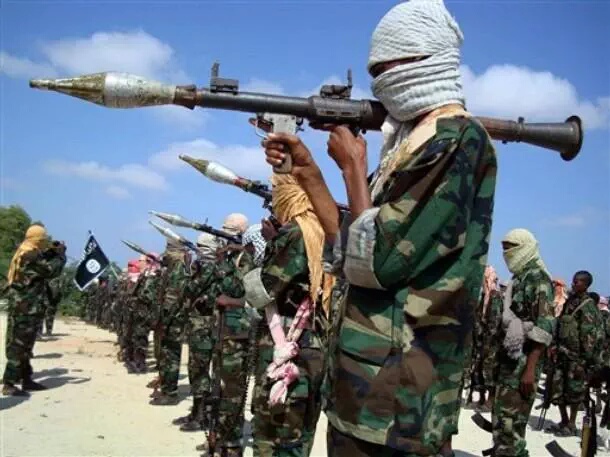
صومالی القاعدہ کے مجاھدین نے بڑا حملہ کر کے افریقی اتحاد کی افواج کے بڑے فوجی اڈے پہ قبضہ کر لیا-

صومالی القاعدہ (الشباب) کے مجاھدین نے یوگنڈہ میں جنالی کے علاقے میں ایک بڑے فوجی بیس پہ حملہ کر کے قبضہ کر لیا اور بیس پہ اپنے جھنڈے لہرا دئیے-
حملے کا آغاز ایک فدائی حملے سے کیا گیا جس سے تقریباً 60 یوگنڈہ کے فوجی ہلاک ہو گئے اور کے بعد الشباب کے مجاھدین نے بیس پہ حملہ کر دیا اور شدید فائرنگ شروع ہو گئی- بچ جانے والے یوگنڈہ کے فوجیوں نے قریبی دریا شبیلے میں کود کر جانیں بچائی- ابھی فوجیوں کی اموات کے کل شمار کا صحیح اندازہ نہیں لگایا جا سکا-
اس فوجی بیس پہ اسلحے کے بڑے ذخائر ہیں جن پہ اب مجاھدین کا قبضہ ہو گیا ہے- مجاھدین نے کاروائی سے پہلے فوجی اڈے کو جانے والا پل بھی دھماکے سے اڑا دیا تھا تا کہ مذید کمک نہ پہنچ سکے اور نہ ہی فوجی وہاں سے بھاگ سکیں-
واضح رھے کہ یوگنڈہ کی فوج افریقی یونین کے فوجی اتحاد AMISOM کا حصہ ہیں جن کو اقوام متحدہ نے الشباب مجاھدین کے خلاف لڑنے کے لئے تشکیل دیا ہے لیکن یہ اتحاد الشباب کو ختم کرنے میں بری طرح ناکام ہو گیا ہے-


posted from Bloggeroid

The Emergence of Jund al-Aqsa and the assassination of Abu Abdelaziz al-Qatari

As Jabhat al-Nusra gained more popularity and became increasingly successful in the Syrian revolution, many sides including ISIL, Qatar and various rebel groups sought to control or at least influence its course.


The Kuwaiti Shiekh, Hamed al-Ali came to Syria and stayed with senior Nusra leaders trying to gain a Qatari foothold in Nusra. Ali is a wealthy man with strong ties to clerics in the Gulf whose blessings are valuable to any Islamic faction in Syria. At this point, Abu Bakr al-Baghdadi was watching Nusra closely and worried about losing it to the Qataris.


In January 2013, following the capture of Taftanaz airbase in rural Idlib, Baghdadi sent Abu Ali al-Anbari and ISIL spokesman al-Adnani (Taha Hamam) to Syria. The men’s mission was to contact Nusra’s second row commanders and convince them to pledge allegiance to Baghdadi. Baghdadi’s envoys secretly promised their supporters within Nusra that they would be given high positions in the Islamic state which would soon extend to Syria. They urged that Nusra had to be dissolved.


Nusra leader Abu Muhammad al-Jolani knew that Baghdadi and Anbari were scheming. In a meeting with Abu Abdelaziz al-Qatari - Muhammad Yusof al-Athamna- they decided to form a new faction called "Saraya al-Aqsa" which became later "Jund al-Aqsa". Jolani and al-Qatari wanted Jund al-Aqsa to include both Syrian and foreign fighters. They planned to join it later if Baghdadi declared the expansion of his state to Syria and if Zawahri decided to dissolve Nusra.

Emir of Jund al-Aqsa Abu Abdelaziz al-Qatari "Muhammad Yusof al-Athamna"

When Baghdadi declared the Islamic state in Iraq and the Levant, most Nusra members joined it immediately. However, Jolani still had loyal groups across Syria and Jund al-Aqsa was still present. For ISIL, Jund al-Aqsa was no more than a hostile project and they believed al-Qatari had to be eliminated.


When the fight between ISIL and various rebel groups began in January 2014, ISIL managed to assassinate al-Qatari and infiltrate Jund al-Aqsa in big numbers. According to all accounts, al-Qatari was assassinated after he handed a written letter to members of the Syrian Revolutionary Front (SRF) led by Jamal Marouf. The message was given to people from the Nassouh family in the al-Bara village. Then Al-Qatari headed to meet al-Anbari in Rif al-Muhandisin in Western Aleppo in an effort to end the fight on Friday January 3, 2014.


Al-Qatari did not know that Marouf's men in al-Bara were secret ISIL members. He disappeared after meeting them. Later on, these same men left for Raqqa and one of them, Ghazi al-Haj, became the ISIL arming official!


On December 20, 2014, six weeks after Marouf loss of his Zawiya Mount stronghold, an outlet close to ISIL published a film entitled "Syria Revolutionaries Front from inside" part 1 in which a former SRF accused Marouf of dictatorship and misbehavior. At the end of the film, it promised that the next part would reveal the identity of al-Qatari assassinator.

In the period between releasing the two parts of the film, Ghazi al-Haj Nassouh, contacted Jamal Marouf inviting him to join ISIL and promised him to be the governor of Idlib and that they would clear Nusra of the area. If he did not accept, they said they would accuse him of killing al-Qatari.


However, Marouf still refused ISIL offers and when the second part of the video was released March 5, 2015, SRF was directly accused of killing al-Qatari. In the video, Ahmad Moustafa Nassouh, a former SRF member who joined ISIL later on, told the story of how al-Qatari disappeared, and was later found dead in a well.

To be continued....


posted from Bloggeroid

Friday, 7 August 2015

Islamic Movement of Uzbekistan pledged allegiance to ISIS

Islamic Movement of Uzbekistan officially pledged allegiance to ISIS leader Abu Bakr Al-Baghdadi.


Leader of IMU Usman Ghazi praised Al-Qaeda for their long struggle based on several decades and then praised Taliban for their sacrifices and battle against NATO and its allies. IMU also criticized Pakistani Taliban (local Taliban of Gull Bahadar in North Waziristan) who gave up fighting against Pakistani troops in North Waziristan. Islamic movement of Uzbekistan says that their fighters were besieged from four sides in North Waziristan by Pakistani forces and their fighters fought on their own without proper assistance from local Taliban who are led by Hafiz Gull Bahadar.

IMU thou relied on TTP for survival and were given sanctuary in tribal areas by Pakistani Taliban have now declared alliance with ISIS who is a rival to Taliban and Al-Qaeda.  IMU didn’t criticize Taliban and Al-Qaeda as ISIS does usually instead they advised ISIS to use scholarly methods in declaring one apostate and avoid Takfir (Declaring one apostate) against those Jihadist groups who haven’t accepted the legitimacy of ISIS caliphate.


It’s important to note that not all Uzbek fighters in Khorasan are part of IMU and the Afghan Media claim of Uzbek presence in North Afghanistan who are assisting Taliban in their Azm offensive are actually from Islamic Jihad Union. Islamic Jihad Union is affiliated with Al-Qaeda and they recently released the details of their involvement in Taliban led operation Azm.

Related Article: Islamic Jihad Union

Saturday, 25 July 2015

Taliban captured joint military base, 180 soldiers surrendered to Taliban.


      Afghan Media reports that Taliban have taken control of a joint military base in northeastern Badakhshan province of Afghanistan and approx 180 soldiers have surrendered to Taliban after a 5 days siege. Sources say that Afghan National Army also surrendered their weapons and equipments to Taliban.

The Afghan authorities had already warned Govt to take immediate action otherwise many lives of soldiers will be lost. According to Afghan National Media, 25+ Afghan soldiers have been killed in the battle. This attack is part of the Taliban country wide operations under the name “Azm”. Taliban have took several districts and key villages and check posts since the start of operation Azm.


Last days, hundreds of Taliban fighters armed with heavy and light weapons launched a coordinated attack on security check posts in Yamgan district, forcing the Afghan troops to tactically step back in a bid to prevent the civilian casualties.

Friday, 19 June 2015

AlShabaab claims to destroy an entire military convoy of Ethopian Army

AlShabaab claims to have destroyed 13 Ethiopian vehicles & killed more than 60 "Ethiopian crusaders’ in the ambush. AlShabaab releases photos of last week's ambush on #Ethiopia convoy, shows burning military trucks & slain soldiers.

Badakshan Province on the verge of falling into the hands of Taliban

Last months, hundreds of Taliban fighters attacked army and police installations around the northern Afghan city of Kunduz. The battle is still raging, with heavy casualties on both sides.

Two weeks prior to the offensive in Kunduz city an estimated 1,000 Taliban fighters overran Afghan army positions in Jurm District in Badakhshan Province. Additionally, heavy fighting has been reported in several other provinces, including Sar-i-Pul, Jowzjan and Faryab the New York Times reports.

Muhammad Yousuf Ayoubi, the provincial council chief, reiterated the vice-governor’s deep concerns: “Kunduz city is surrounded from four directions. If the government does not pay urgent attention, there is serious risk of it falling to the Taliban.”


Some of the pictures released by Taliban sources on twitters:

Afghan Taliban shaking hands after capturing the base.


Two more Military installations overran by Taliban in Kunduz city of Badakhshan Province.


Afghan Army Men captured by Taliban in Northern Afghanistan.

Afghan Taliban doing victory parade in Imam Sahb District which they captured last month.


Govt allied Militia (Arbaki) men captured by Taliban, pic and details released by Al-Emarah Studio.

Afghan National Media still denies that Taliban overran majority of the Northern Afghanistan but the independent sources shows a different side of the story. Tajikistan deploying additional forces on its border with Afghanistan shows the seriousness of Afghan Taliban Offensive in Northern province of Badakhshan. Afghan Officials also verified last month that 11+ districts of the province have fallen to Taliban.

Thursday, 18 June 2015

طالبان تحریک کا آغاز----- پارٹ 1 ۔۔۔۔۔ (تحریر منصور کوھستانی)


طالبان تحریک کا آغاز-----پارٹ 1

جیمز فرگوسن کی کتاب "طالبان" سے ماخوذ....

اج کل جب کہ ہم افغانستان میں برطانوی فوجیوں کی ہلاکت کی خبر سنتے ہیں تو افغانستان کا خیال ہی بہت خطرناک اور دہشت انگیز لگتا ہے لیکن 1994 میں جب طالبان کی تحریک کا وجود عمل میں آیا اُس سے پہلے کا افغانستان آج کے افغانستان کے مقابلے میں کہیں ذیادہ پُر آشوب اور وحشت ناک تھا- روشین فیڈریشن جس نے اپنا دس سالہ قبضہ 1989 میں ختم کر دیا تھا اور واپس پسپائی میں عافیت جانی تھی اُس کے جانے کے بعد وہ قوم پرست، قبائلی اور مذہبی تمام قسم کے لیڈران جو روس کو شکست دینے میں متحد ہوئے تھے اور مجاھدین کہلاتے تھے ان میں اکثر آپس میں دست و گیریبان تھے- 1994 کے پہلے 6 ماہ میں صرف کابل شہر پہ قبضے کے خونی لڑائی میں 25000 عام شہری ہلاک ہو گئے.
اُس وقت افغانستان ایک ایسی تباہی و قتلِ عام دیکھ رہا تھا جس کی مثال سوویت روس کے قبضے کے دوران بھی نہیں دیکھی گئی تھی- 1989 کے بعد دنیا کی نظر میں افغانوں کی کوئی اہمیت نہ رہی تھی اور اس تباہی و بربادی کا علم ہونے کے باوجود مجرمانہ چشم پوشی کی جا رہی تھی-
روس کے خلاف لڑائی تب ایک قصہءپارینہ بن چکا تھا اور اس کو ماضی کا قصہ سمجھ کر ہی بھلا دیا گیا تھا-
1994 میں امریکہ کی توجہ کے اور بہت مراکز تھے- صومالیہ سے امریکی افواج واپس بلائی جا رہیں تھیں اور آگے بوسنیاء کی صورتحال تباہی کی جانب بڑھ رہی تھی- صدام حسین نے دوبارہ اپنی افواج کویتی بارڈر پہ لگا دیں تھیں اور روانڈا میں 8 لاکھ "ٹیوٹس" لوگوں کو "ہیوٹس" میلیشیاء نے گاجر مولی کی طرح کاٹ ڈالا تھا اور ہمیشہ کی طرح یو.این.او ایک خاموش تماشائی بنا رہا-اس سب کے مقابلے میں اس لئے کابل کی تباہی کی کسی کو پرواہ نہیں تھی-
افغانستان میں کوئی حکومت اور قانون موجود نہیں تھا، اور ہر طرف چوروں، ڈاکوؤں اور مسلح گروہوں کا راج تھا جو لوگوں کو لوٹتے، قتل و غارت گری میں ملوث ہوتے اور سڑکوں پہ جگہ جگہ پہ ان لوگوں نے چیک پوسٹس بنا رکھیں تھیں جہاں گاڑیوں سے بھتہ وصول کیا جاتا- ان کی اکثریت سابقہ جنگجو پہ مشتمل تھی  جن کی آمدنی کا ذریعہ امریکی مفاد کے ختم ہوتے ہی ختم ہو گیا تھا- کچھ ان میں عادی مجرم تھے- انہیں نے اپنے اپنے علاقوں میں چیک پوسٹس بنائی ہوئیں تھیں اور ان کی تعداد اتنی ذیادہ تھی کہ صرف قندھار شہر اور پاکستانی بارڈر کے درمیان 65 کلومیٹر میں  50 سے ذیادہ چیک پوسٹس تھیں جب پہ ٹریفک اے بھتہ لیا جاتا تھا- اشیاء کو ایک جگہ سے دوسرے جگہ لے جانے کے لئے قیمت سے ذیادہ بھتہ ادا کرنا پڑتا اس وجہ سے کھانے پینے کی اشیاء تقریباً نایاب تھیں-
قندھار کے مضافات میں "صالح" نامی ایک بدمعاش کا راج تھا جس کے لئے قتل کرنا روز کا معمول تھا اور یہ جب چاہتا جس لڑکی کو پسند کرتا اسے اٹھا کر لے جاتا- ایک ایسے ہی واقعے میں ہرات سے قندھار آتے ہوئے دو لڑکیاں اغوا ہوئیں گئیں- ان کو اسی صالح نے اغوا کیا اور ان لڑکیوں پہ تشدد اور گینگ ریپ کے بعد ان کو قتل کر کے ان کی لاشیں صالح کی ہی ایک چیک پوسٹ کے پیچھے ایک گڑھے میں پھینک دی گئیں-
قندھار شہر میں بھی صورتحال ایسی ہی تھی اور یہاں دو لوکل کمانڈرز استاد عبدالحلیم اور ملا نقیب کے بیچ ایک خونی لڑائیاں جاری تھیں- ہر گلی محلے میں لاشیں تھیں اور گھروں کی تباہی سے ملبے کو ڈھیر ہر طرف دکھائی دیتے-
فضا میں بارود کی گہری بو بس گئی تھی- ان دو لوکل وارلارڈز کی ایک لڑائی چھ دن جاری رہے- چھٹے دن جمعے کے بعد لوگ جمع ہوئے اور انہوں نے لڑائی رکوانے کے لئے مارچ کرنا شروع کر دیا- ان کا یہ مارچ جب کابل دروازہ چوک تک پہنچاء تو "بارو" نامی ایک سابقہ مجاھد نے لوگوں پہ ٹینک کو گولے سے فائر کئے- درجنوں لوگ اس کے نتیجے میں ہلاک ہو گئے- یہ ایک مثال ہے ایسے واقعات معمول تھا- قندھار کے لوگوں نے روس کے قبضے کے دوران بھی برا وقت دیکھا تھا لیکن یہ سب بد ترین تھا- اس عرصہ کو اب بھی "ٹوپکیان" کے نام سے یاد کیا جاتا ہے جس کا مطلب ہے "مسلح افراد کا وقت"- 
ذیادہ تر مذہبی کمانڈر ہتھیار رکھ کر اپنے گھروں کو چلے گئے تھے کیونکہ کہ ان کے خیال میں کافر روس کی شکست کو بعد مزید لڑائی کی کوئی وجہ نہیں رہی تھی- ایسا ہی ایک مزہبی کمانڈروں میں ایک ملا عبدالاسلام ضعیف تھے جنہوں نے 1983 میں 15 سال کی عمر میں روس کے خلاف جنگ میں حصہ لیا- اس دوران ان پہ 9 بار قاتلانہ حملے ہوئے اور دو بار جنگ میں زخمی ہوئے- ایک بار 1988 میں قندھار ایئرپورٹ کی مشہور لڑائی میں زخمی ہوئے تھے- 
جنگ سے واپسی پہ انہوں نے محنت مزدوی شروع کی اور کھدائی کرنے والے مزدور کا کام کیا- 1993 میں وہ ایک چھوٹے سے گاؤں کی مسجد میں امامت کرانی شروع کر دی- قندھار میں لڑائی کی گھن گرج 30 میل دور مسجد میں بیٹھے ملا ضعیف کے کان بھی اکثر سنتے تھے- شہر سے آنے والے دوست اور مسافر بھی انہیں لڑائیوں اور قتلِ عام کا حال سناتے رہتے تھے- ایک دن اس کے ایک دوست عبدالمحمد نے اسے بتایا کہ کس طرح شہر سے واپسی پہ اس پہ دو ڈاکوؤں نے حملہ کیا اور ایک معجزاتی طور پہ ہی وہ اُن سے محفوظ رہا- حیرت انگیز طور پہ یہ حملہ قندھار یا اس کے آس پاس نہیں ہوا تھا بلکہ دن دیہاڑے ملا ضعیف کی مسجد کے بہت قریب ہوا تھا- ضعیف ایک صابر، امن پسند اور دھیمے مزاج کا انسان تھا لیکن اب اس کے صبر کی انتہاء ہو گئی تھی- اس نے اپنی جوانی اُن کافروں کے خلاف لڑتے ہوئے گزاری تھی جو اس کے دین اور وطن کے دشمن تھے- وہ جانتا تھا کہ دس لاکھ لوگوں نے اس مقصد کی تکمیل کے لئے اپنی جان دی تھی لیکن کیا وہ مقصد ہو گیا تھا؟ کیا وہ اسلامی معاشرہ اور اسلامی ریاست وجود میں آ گئے تھے جن کے حصول کے لئے اس نے اور اس کے ساتھیوں نے اتنی قربانیاں دی تھیں؟
اس سوال کا بہت واضح اور آسان جواب ضعیف کے سامنے تھا-
نہیں-
جنگ ابھی ختم نہیں ہوئی!

کچھ کیا جانا باقی تھا.....
بہت کچھ کیا جانا ابھی باقی تھا...


جاری ہے....

Wednesday, 17 June 2015